

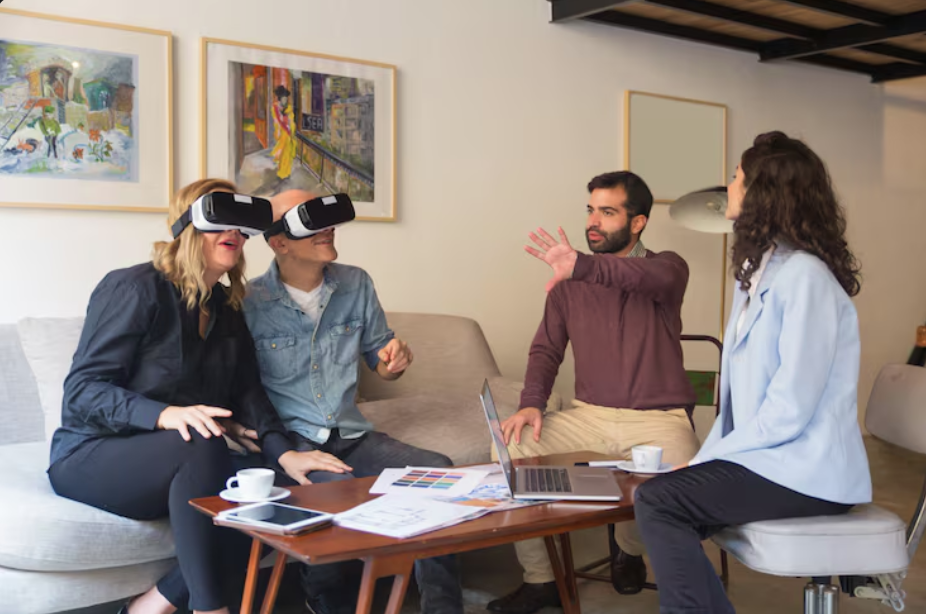
Design collaboration has taken a new face that is not only via emails, fixed drawings, and screen-shared calls. Due to the increasing complexity of the projects and distribution of teams to a greater extent, the necessity of quick, clear, and more immersive collaboration tools has never been higher.
VR 3D modeling is a new game-changer tool, which allows designers, engineers, and clients to collaborate in real-time in a common virtual world. VR is changing the collaborative design processes by changing the way teams communicate and make decisions.
The Limits of Traditional Collaboration Methods
Conventional design teamwork usually depends on a 2D representation, rendered pictures, and taped walkthroughs. These techniques are, however, effective to some extent but they may cause misinterpretation particularly where the stakeholders possess different degrees of technical knowledge.
The feedback cycles may be rather slow, and it may take several revisions and follow-up meetings. Significant spatial concerns might remain unperceived till the end of the process. It is in this area that VR 3D modeling injects a more interactive and straightforward method of collaboration.
Creating Shared Immersive Workspaces
VR 3D modeling has made it possible to develop common immersive workspaces, which are among the most significant contributions. In such virtual environments, two or more participants will be able to access the same model concurrently, irrespective of their location.
Within a VR space, teams can:
- Designs are done by walking through in full scale.
- Discuss information from a variety of perspectives.
- Naturally, talk with your finger, your hand.
- Change and get updates in real-time.
In the case of contemporary 3D modeling services, shared environments make collaboration a live, interactive experience.
Real-Time Feedback and Faster Decisions
One of the benefits of VR is real-time collaboration. Stakeholders are able to review the model concurrently instead of reviewing the designs asynchronously and give immediate feedback.
With VR 3D modeling, teams can:
- Determine problems when they occur.
- Compare designs in the spot market.
- Solve problems without protracted discussions.
This immediacy plays a vital role in reducing the feedback loop and proceeding with projects at a higher rate.
Bridging the Gap Between Technical and Non-Technical Stakeholders
Design projects usually have some participants whose technical understanding is not comparable. Where designers and engineers can read drawings without any problems, the clients and decision-makers might not be able to visualize the final result.
VR 3D modeling is a universal visual language. It makes the design accessible to all, which allows everyone to feel the design in the same immersive environment and allows everybody to understand. VR is specifically applied in many 3D modeling services to enhance communication and alignment with the clients.
Supporting Remote and Global Teams
Remote work is becoming the norm, and VR is particularly becoming useful to distributed teams. Even in the event where the participants are located on different continents, virtual collaboration spaces create the same sense as being in the same room.
VR 3D modeling enables global teams to work jointly without necessarily having to travel regularly, which saves on costs and at the same time keeps the team highly engaged. The latter is especially helpful with large-scale or long-term assignments where various stakeholders are involved.
Enhancing Accuracy Through Collaborative Validation
VR real-time collaboration also enhances accuracy in design. Various professionals working on a design simultaneously are more likely to detect possible problems in their early stages.
Within a common VR space, teams can:
- Clearance problems and conflicts at the spot.
- Accessibility and usability are to be tested.
- Test design assumptions.
Professional 3D modeling companies can use this group validation to minimize errors and enhance the quality of the project as a whole.
Promoting Innovative Teamwork
Teamwork is not only efficient, but it is creative. VR environments promote the freedom of discussing and experimenting, and teams can feel free to experiment with the idea.
With VR 3D modeling, the designers are more comfortable suggesting alternatives and have a free shot at a different direction. Creativity results in more inventive work and powerful end designs.
Combining VR and the Current Design Workflows
VR collaboration is most effective when combined with conventional ones. The conventional software enables designers to create detailed models, which can be taken to VR to be reviewed collaboratively.
Most 3D modeling services are now providing hybrid workflows that are able to integrate technical accuracy with immersive collaboration to achieve the best of both worlds.
Conclusion
VR 3D modeling is transforming the hyper-real-time design collaboration by making common, immersive spaces in which teams may both communicate, validate, and make together. VR can help to conduct more efficient and human-centered design processes by enhancing understanding and making feedback quicker and easier, as well as facilitating the development of apps through the use of remote working.
With more and more complex and collaborative projects underway, 3D modeling services that accept VR will be a major factor in how teams design collaboratively, in real time.
